
Shoulder
Anatomy
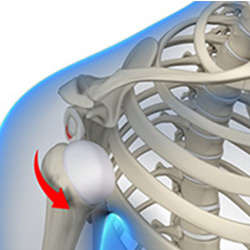
The shoulder is the most flexible joint in the body that enables a wide range of movements including forward flexion, abduction, adduction, external rotation, internal rotation, and 360-degree circumduction. Thus, the shoulder joint is considered the most insecure joint of the body, but the support of ligaments, muscles, and tendons function to provide the required stability. Know More Video
Conditions
- Arthritis of the Shoulder
- Rotator Cuff Tear Video
- Shoulder Instability Video
- Shoulder Fracture
- Shoulder Labral Tear
- Acromioclavicular (AC) Arthritis
- SLAP Tears
- Proximal Humerus Fractures
- Clavicle Fracture Video
- Rotator Cuff Pain
- Shoulder Dislocation
- Shoulder Pain Video
- Shoulder ImpingementVideo
- Frozen ShoulderVideo
- Shoulder Bursitis
- AC Joint Separation
- Shoulder Disorders
- Biceps Tendon RuptureVideo
- Subluxation
- Rotator Cuff Arthropathy
- Shoulder Tendonitis
- Parsonage-Turner Syndrome
- Throwing Injuries of the Shoulder
- Shoulder Sports Injuries
Procedures
- Shoulder Arthroscopy Video
- Shoulder Joint Replacement Video
- Reverse Shoulder Replacement
- Rotator Cuff RepairVideo
- Shoulder Labrum ReconstructionVideo
- Shoulder Reconstruction Surgery
- Shoulder Stabilization
- Shoulder Preservation Surgery
- Failed Shoulder Surgery
- Arthroscopic Bankart Repair
- Latarjet ProcedureVideo
- Shoulder Stiffness Surgery
- Shoulder Fracture Care
- Platelet-Rich Plasma (PRP) for the Shoulder
- Exercises for Shoulder Impingement Syndrome
- Minimally Invasive Shoulder Joint ReplacementVideo
- Partial Shoulder Replacement (Shoulder Hemiarthroplasty)