What is platelet-rich plasma (PRP)?
PRP is a form of regenerative medicine that uses your body's own natural healing factors to accelerate tissue repair.
- How it's made: A small sample of your blood is drawn and placed in a centrifuge, which spins at a high speed. This process separates the blood into its different components, concentrating the platelets into a rich plasma solution.
- Healing factors: These concentrated platelets release powerful growth factors and proteins that stimulate cell reproduction and trigger the natural healing cascade in the targeted area.
Benefits of PRP therapy for upper extremity conditions
In the treatment of many upper extremity conditions, PRP can be a valuable treatment option for many chronic and acute upper extremity conditions.
Natural and minimally invasive
- Utilizes your own biology: Because the PRP is created from your own blood, there is a very low risk of allergic reaction or rejection.
- Avoids surgery: For many patients, PRP can serve as a less invasive alternative to surgery, avoiding incisions and a lengthy recovery.
Promotes healing and faster recovery
- Stimulates tissue repair :The growth factors in PRP help to repair and regenerate damaged tissues in tendons, ligaments, and muscles.
- Reduces recovery time: By enhancing the body's natural healing processes, PRP can help shorten the overall recovery period for certain injuries.
Provides long-lasting pain relief
- Reduces inflammation: PRP has anti-inflammatory properties that can help decrease swelling and reduce pain, particularly in conditions like tendinitis and osteoarthritis.
- Offers a long-term solution: Unlike a corticosteroid injection, which can risk providing only short-term relief, PRP promotes long-term healing and pain reduction.
Effective for specific conditions
For upper extremity orthopedic patients, PRP therapy has shown clinical benefit for conditions such as:
- Chronic tendinopathies: This includes "tennis elbow" (lateral epicondylitis) and "golfer's elbow" (medial epicondylitis), where PRP can significantly improve pain and function.
- Partial rotator cuff tears: Research supports the use of PRP to improve pain and function in partial-thickness rotator cuff tears.
- Ligament injuries: PRP can accelerate the healing of injured ligaments, such as an ulnar collateral ligament (UCL) sprain.
- Osteoarthritis: Studies suggest PRP is effective in treating osteoarthritis of the shoulder and thumb joints, reducing pain and improving function.
What to expect from PRP treatment
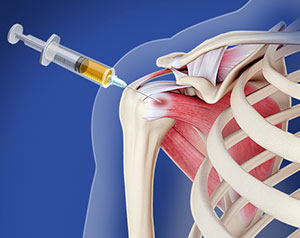
- The procedure: The process typically takes less than an hour in the office. After the blood draw and preparation of the PRP, the concentrated solution is injected directly into the injured area, guided by ultrasound for precision.
- Post-injection: You may experience mild soreness and swelling for a few days. Your doctor will provide a rehabilitation plan, and you may need to limit activity for a few weeks to allow the healing process to begin.
- Timeline for results: Many patients start to feel relief within several weeks, with full benefits appearing over several months. You may need more than one treatment depending on the severity of your condition